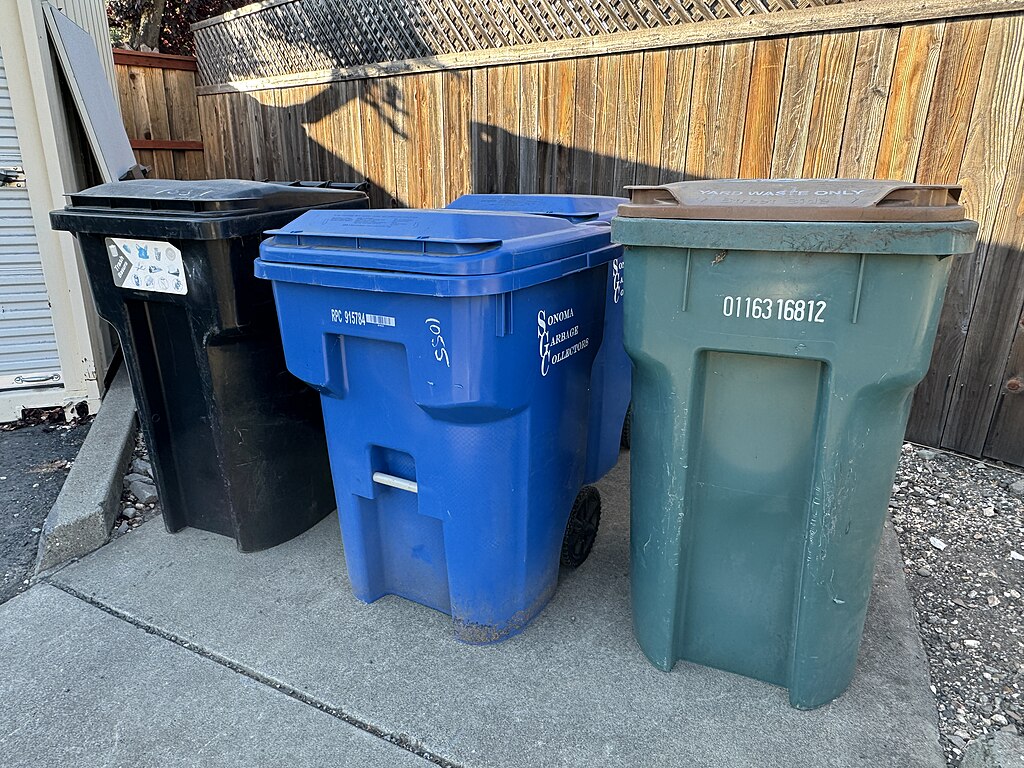
In 1991, I was appointed to the California Integrated Waste Management Board to oversee a new law, the California Integrated Waste Management Act of 1989. Its purpose was to revolutionize California’s approach to managing solid waste. Ninety percent of the state’s solid waste was landfilled at that time and there was concern that Southern California’s landfill capacity could soon be exhausted without government intervention.
The Integrated Waste Management Act aimed to reduce waste disposal by 25% by 1995 and 50% by 2000. Every city and county in the state was mandated to achieve these mandates or face fines of up to $10,000 per day.
By 1995 the 25% standard was met, and by 2000 the 50% reduction target was reached. Recycling made this possible.
But, from 2000 onward, recycling began to stall and then decline. It fell to a low of 37% and now stands at about 41%.
The most significant factor that caused the recycling downturn was a change in recycling policy in China. Throughout the 1990s and through first decade of the 2000s, there was enormous demand from China for recyclables from California-especially paper and cardboard. Then China decided that it no longer needed or wanted recycling imports. Its dramatic economic growth produced its own recyclable supplies. In 2017 China passed an edict to stop imports.
This led to a market crash that has fundamentally changed the recycling marketplace to this day. Compounding China’s on ban on recyclable imports was the steady demise of recycling industries such as paper mills within California.
Also, non-recyclable plastics have replaced more readily recycled paper and aluminum containers along with packaging composed of multiple materials that are basically impossible to recycle.
Several new California laws have passed that are attempting to curb increased plastics packaging as well as reducing organic waste being landfilled. SB 54, the Plastic Pollution Prevention and Packaging Producer Responsibility Act became law in 2022. It aims to change industry’s packaging practices. Also in 2022, California enacted SB 1383, an ambitious organics recycling law. While I’m skeptical that SB 54 will succeed because of its complexity, I think SB 1383 may prove successful.
It has been thirty-seven years since California launched the boldest measures in the nation to change the way waste is generated and managed. California’s multi-billion-dollar investment in collection and processing infrastructure is capable of capturing far more recyclables than it does today. But this potential recovery is constrained by the increasingly non-recyclable nature of the waste stream and limited recycling markets.
All kinds of claims are made by product manufacturers and the plastics industry that their packaging is, or can be, recycled. But these assertions are mostly rhetoric. Little or no progress is possible without a fundamental reckoning with the practicalities of recycling.
As it stands, we’re spending too much time and effort accomplishing too little. The regulatory system is excessively complicated. We need straightforward packaging standards that either result in truly recyclable materials, or we need to alter the packaging stream to increase the percentage of traditional recyclable materials such as paper. And we must buttress increased material recovery by building recycling industries in California or adjacent states.